
FUTURE-READY FTTH AND LAST-MILE NETWORK SOLUTIONS

At eX² Technology, we understand the current demand to expand reliable broadband faster.
eX² provides last-mile design, engineering, permitting and deployment services for public and private FTTH, FTTP and FTTx broadband initiatives. Whether supporting a municipality, electric cooperative, utility, sovereign nation or service provider, our team delivers scalable open access networks and last-mile fiber network solutions that improve connectivity, support broadband expansion, promote economic development and create long-term value.
Whether your project is a private build, publicly funded infrastructure program or an open access network, our approach begins with a detailed conversation with key project stakeholders where we identify all specific design needs and requirements. This becomes the foundation for consistent, scalable design and streamlined permitting processes. And, with more than a decade of last-mile network experience, we help network owners accelerate deployment of reliable broadband infrastructure through an integrated design and permitting process that keeps the project on schedule and in compliance.
Download our Last-Mile Network Services flyer.
What is a Last-Mile Fiber Network?
Understanding Last-Mile Fiber Networks
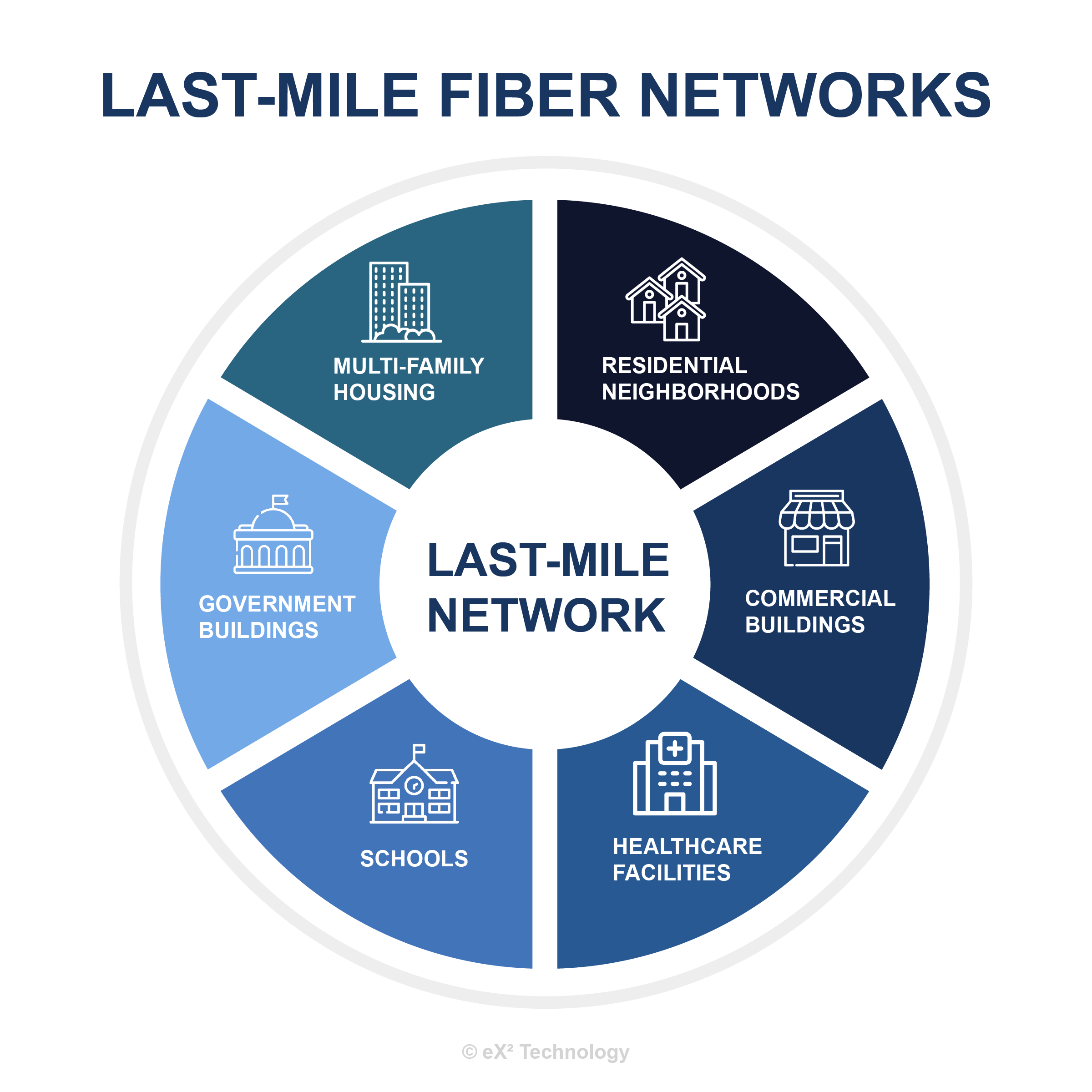
A last-mile fiber network is the critical final connection between a service provider’s network and the homes, businesses, campuses and communities it serves. It is the portion of the broadband infrastructure that brings high-capacity connectivity directly to the end user. It is where large-scale fiber infrastructure becomes real-world access, enabling faster speeds, greater reliability and the bandwidth needed to support how people live, work, learn and connect.
Before internet service reaches a home or business, data moves through several layers of network infrastructure.
The Backbone
The backbone is made up of massive, high-capacity fiber routes, including subsea and underground cables, that carry data across countries, continents and global networks.
The Middle Mile
The middle mile connects those major backbone routes to regional networks, cities, towns and local service areas.
The Last Mile
The last mile is the access network that extends from the local provider network to individual addresses, neighborhoods, businesses or multi-tenant buildings. This is the final link that delivers service directly to the customer.
eX² Technology’s Turnkey Solutions for a Future-Proof Network
EARLY-STAGE PLANNING
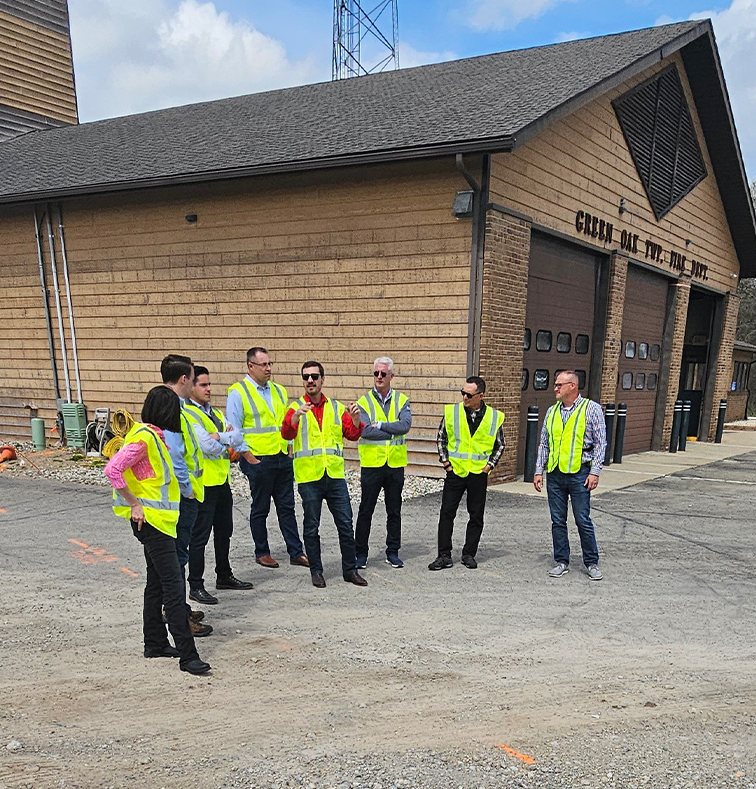
We work with our customers to reduce uncertainty by providing a clear starting point for last-mile network deployments. Doing so minimizes project risks, provides clear budget expectations and helps to determine accurate scheduling.
Feasibility and market assessments for last mile infrastructure
Route analysis for aerial and underground deployment
Permitting research, risk review and schedule planning
DESIGN, PERMITTING & CONSTRUCTION DOCUMENTS
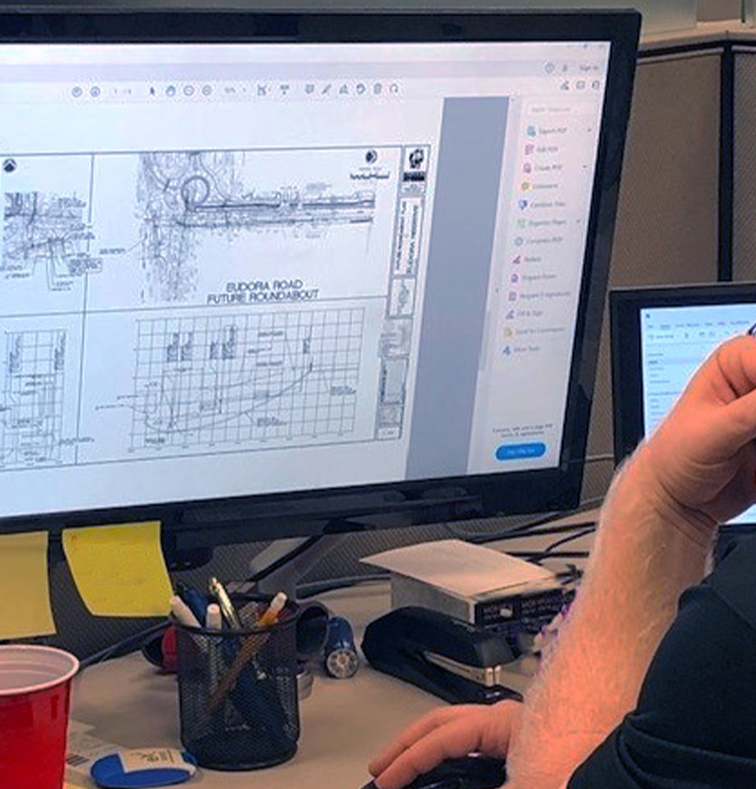
eX² turns project plans into buildable permit- and construction-ready documents with constructability, permitting alignment and grant compliance in mind to minimize revisions, approval delays and deployment risk.
High-level design
Construction ride-outs, address validation and field verification
Detailed design for aerial, underground and make-ready requirements
Permit drawings and submittals
Construction drawings and documentation
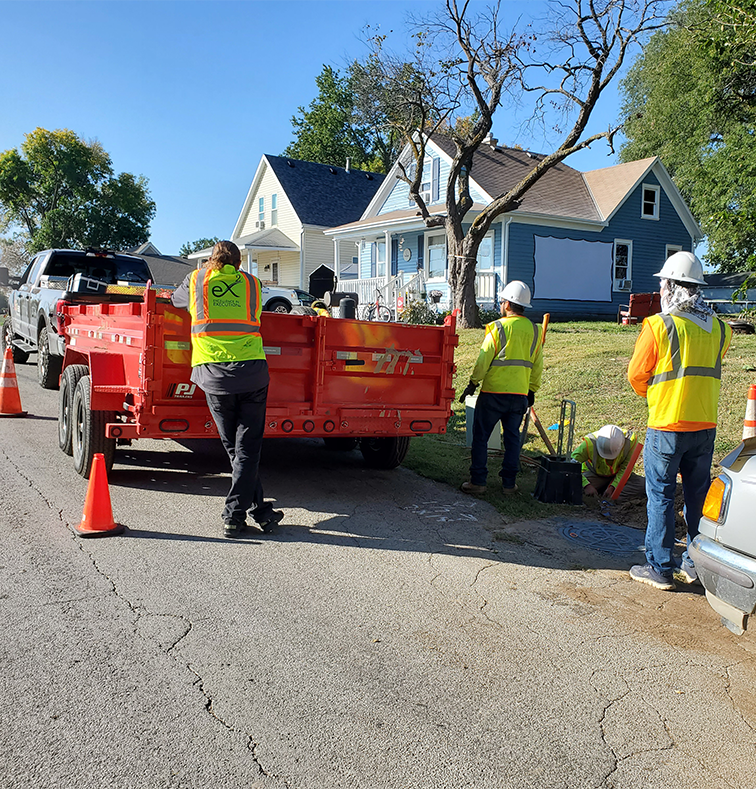
PROCUREMENT & CONSTRUCTION OVERSIGHT
At eX², we help our customers move projects from design and planning into execution, reducing administrative burdens, improving construction quality and providing greater access to schedule, budget and field progress.
RFP development
Construction oversight
Contractor selection support
Construction inspection and quality control
Owner’s project management
Near real-time geospatial progress tracking

COMPLIANCE & FUNDING SUPPORT
eX² helps broadband infrastructure projects move from opportunity to outcome with grant reporting support, closeout documentation and milestone tracking that keeps funding requirements, compliance obligations and project progress clearly aligned from start to finish. For BEAD projects and other broadband grants, our staff helps align documentation with reporting expectations so projects remain auditable. We have in-depth experience working under ARPA, RDOF, ReConnect, E-Rate, CARES Act grant funding requirements.
Grant reporting support
Documentation templates
Progress tracking
Download our Last-Mile Fiber Network Services Summary!
FIBER TO THE HOME DESIGN & PERMITTING FAQs
-
The last mile often has the greatest impact on the end customer experience. Even if the larger network is built for extremely high capacity, the final connection determines how much of that performance actually reaches the user.
Performance at the Edge
A network may be capable of carrying enormous amounts of data, but if the final connection is outdated, congested, or dependent on older copper-based infrastructure, speed and reliability can be limited.Symmetrical Speeds
Fiber supports high-speed upload and download performance, making it especially valuable for video conferencing, cloud applications, remote work, content creation, telehealth and business operations.Low Latency
Because fiber transmits data using light, it can significantly reduce lag compared to legacy copper, coaxial or DSL networks. That means a faster, more responsive experience for users. -
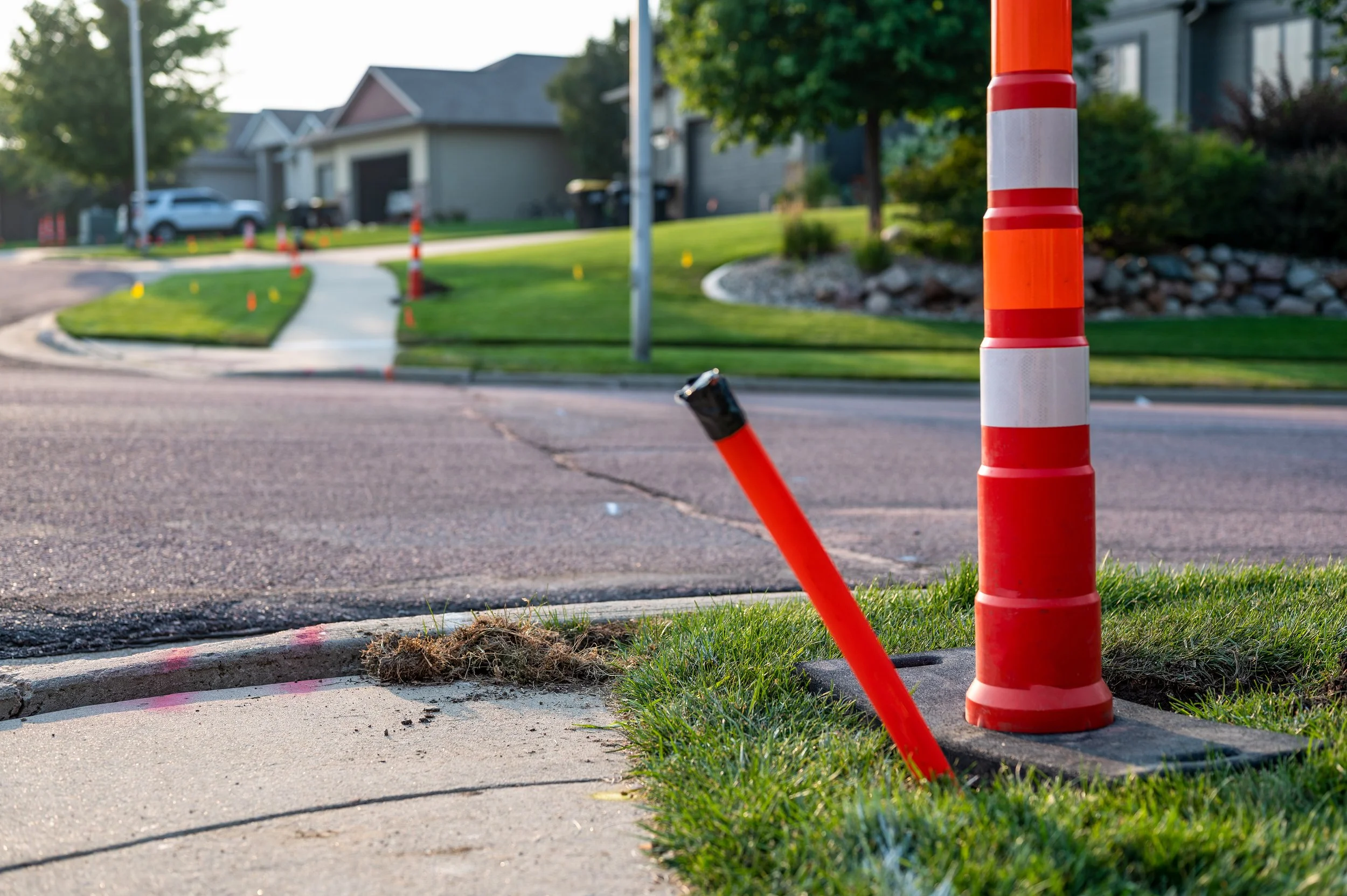
Building the last mile is often one of the most challenging parts of a broadband project. Unlike long-haul or middle-mile routes or controlled network environments, last-mile deployment takes place in active neighborhoods, business districts, rights-of-way and developed areas.
Crews must account for existing utilities, permitting requirements, sidewalks, roads, driveways, landscaping, property access and community impact. Every address presents its own engineering and construction considerations.
That is why last-mile fiber requires careful planning, experienced project management and efficient execution. When done right, it creates the foundation for resilient, high-performance connectivity that can serve communities and businesses for decades.
-
In an open-access network model, the network owner develops, owns and manages the underlying fiber infrastructure while providing wholesale network access to multiple service providers and other dark fiber users. This approach enables competing Internet Service Providers (ISPs) to deliver services over the same network, fostering competition, expanding consumer choice and maximizing the value of broadband infrastructure investments.
-
For communities considering an open access network, shared infrastructure can make it easier for multiple service providers to reach the same end user base while preserving local control. It invites service provider competition and often results in better services and lower end user costs.
-
Early planning confirms addresses, routes, make-ready issues, permitting requirements and construction constraints before crews mobilize. This helps reduce delays and improves last mile connectivity by keeping the build aligned with community needs and funding milestones.
-
Yes. eX² is prepared to support BEAD-funded grant programs and has a history of working with NTIA, ARPA, RDOF, ReConnect, E-Rate and other grant recipients by preparing designs, permit packages, documentation templates and progress tracking that help projects stay organized from early planning through closeout.
-
FTTH — Fiber to the Home
Fiber is delivered directly to an individual residence. This provides the strongest performance, highest reliability and best long-term scalability.FTTP — Fiber to the Premise
Fiber is brought to a building, typically to a telecommunications or utility room, and service is then distributed to individual tenants, offices or units through the building’s internal wiring.FTTC — Fiber to the Curb
Fiber reaches a nearby curb, pole, cabinet, or enclosure, while the final connection into the property uses existing copper or coaxial infrastructure. This improves performance over legacy networks but may not deliver the full capability of fiber all the way to the premises.FTTX – Fiber to Everything
FTTX is the all-encompassing term for broadband network architectures where the “X” represents the endpoint where the fiber cable terminates.
Proven Last-Mile Network Project Experience Across the U.S.
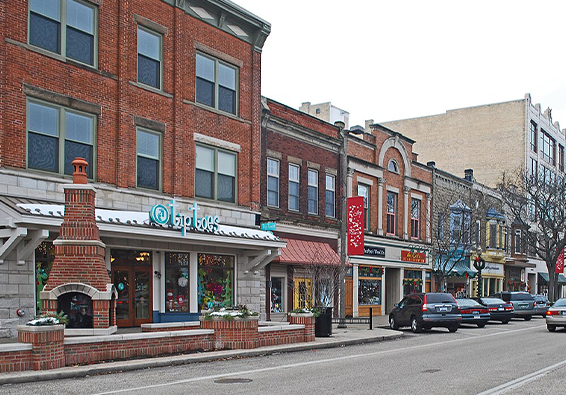
Holland BPW
Grafton County, NH
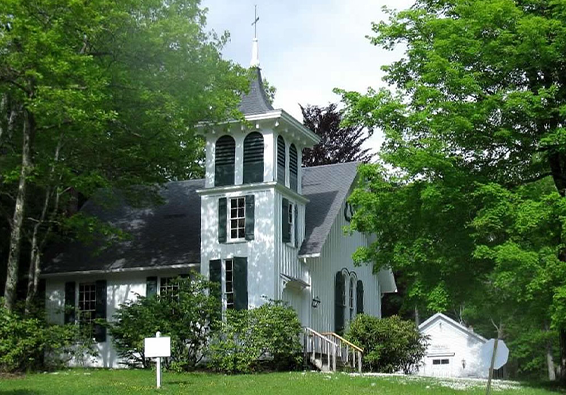
Mount Washington, MA
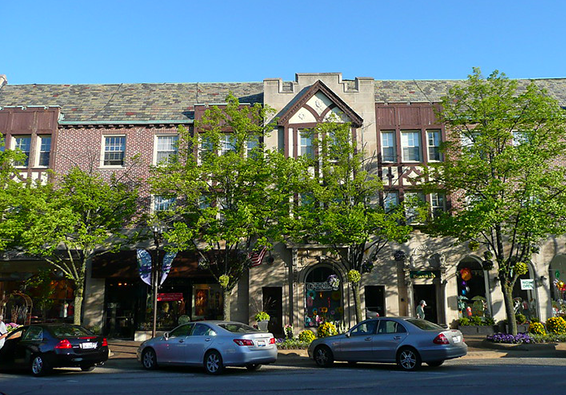
Highland Park, IL
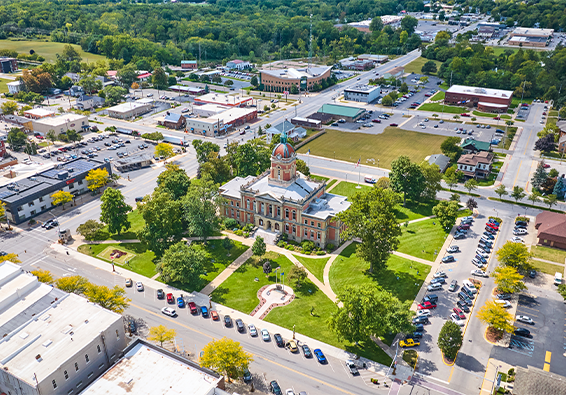
Surf Internet
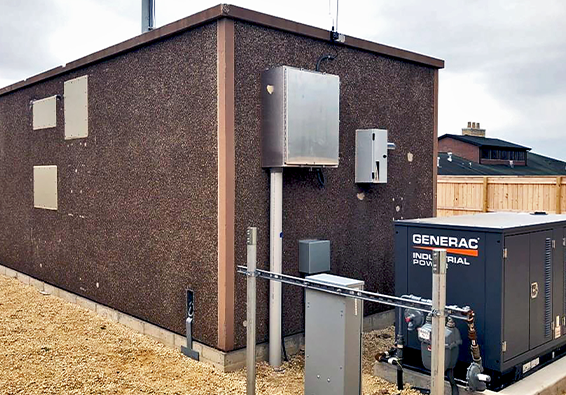
MetroNet
Why eX² for a Last-Mile Fiber Network?
Accelerating Broadband Expansion Through Proven Expertise
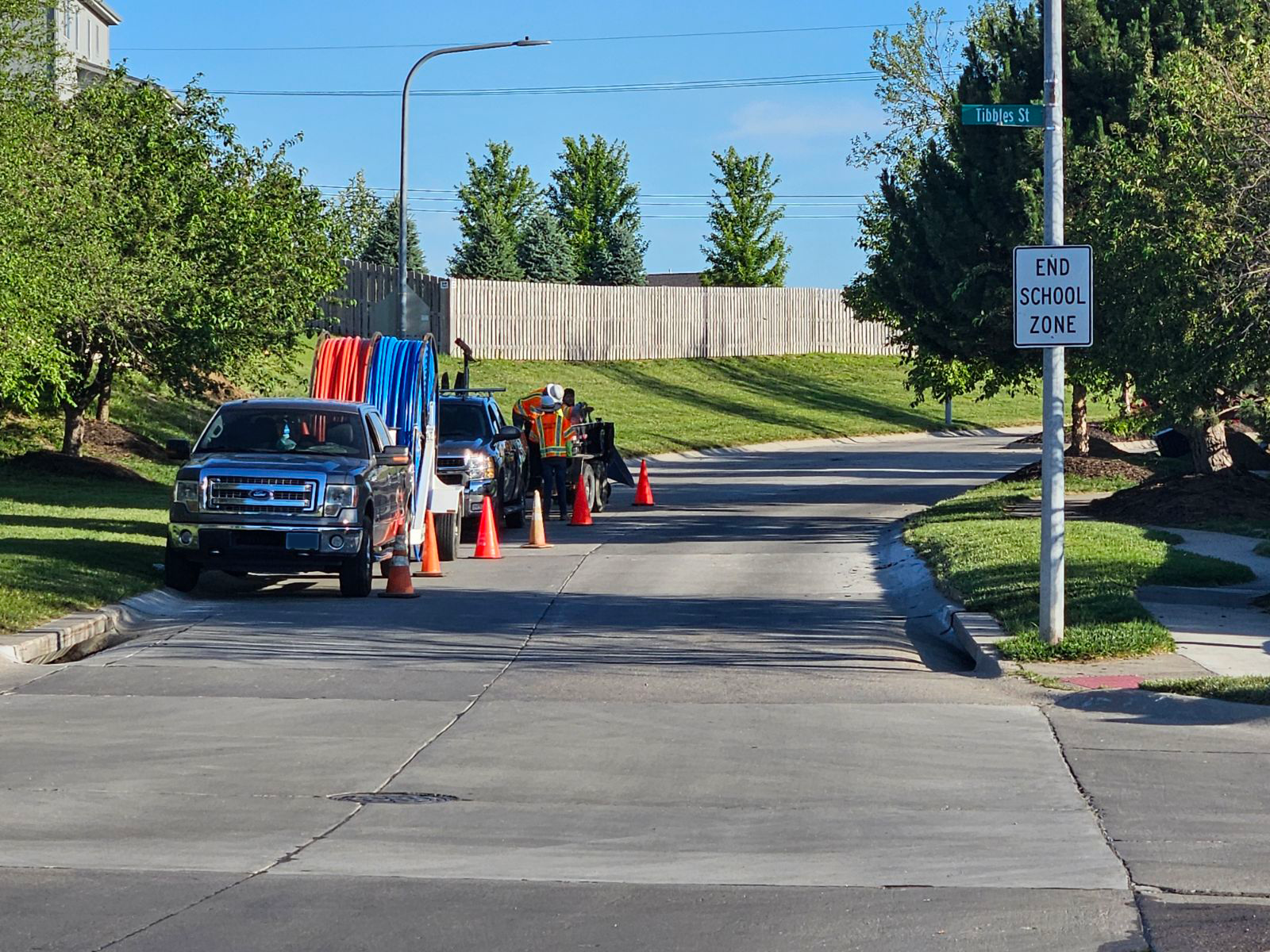
With more than a decade of experience designing and deploying fiber networks, eX² helps navigate the complexities of modern last mile infrastructure projects.
We have completed hundreds of projects to deliver sustainable fiber infrastructure across rural, suburban and metropolitan areas with expertise in aerial and underground networks. Our approach is to identify potential design, permitting, procurement, construction and compliance issues early to reduce rework, protect the schedule and give network owners a clearer path to delivering a last-mile fiber network.
Whether your goal is improving rural connectivity, serving underserved communities or expanding network reach into new markets, our experts provide a streamlined path from concept to deployment.
PARTNER WITH US ON YOUR LAST-MILE NETWORK PROJECT
With demand for high-speed broadband continuing to grow each year, your last-mile network needs the capacity and reliability to keep up. Partner with experts in FTTH and last-mile fiber network deployment.
Ready to expand your network? Fill out the form and we'll be in touch!